

What is the difference between ForeverBreathe Homes & Certified Passive Houses in Australia?

Around the world, builders and designers are increasingly looking for ways to create homes that are healthier, more energy efficient, and more resilient to changing climates.
Two approaches often discussed in this space are Passive House and the Foreverbreathe Specification. Both aim to improve indoor comfort and energy performance, but they take different approaches to how a home manages air, moisture, and temperature.
Understanding these differences can help builders, architects, and homeowners choose the system that best suits their climate, design goals, and long-term performance expectations.
Two Different APPROACHES
Passive House focuses on creating highly airtight homes, supported by high levels of insulation and mechanical ventilation systems to maintain indoor air quality and temperature.
The Foreverbreathe Specification takes an alternative approach. Rather than relying solely on airtightness, it uses breathable, vapour-permeable materials that allow the building to help regulate moisture and humidity more naturally.
Both approaches are designed to deliver comfortable, efficient homes, simply through different methods and material systems.
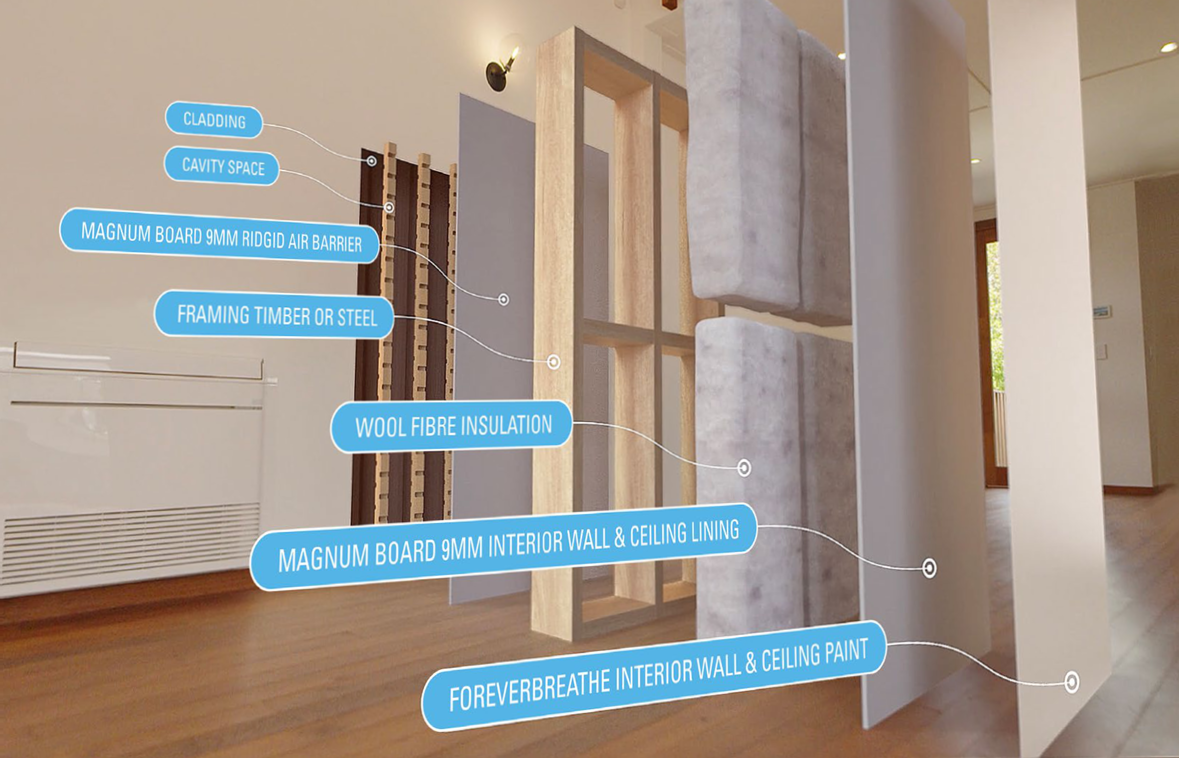
The Foreverbreathe Wall System
Experience from New Zealand
The Foreverbreathe system has been used in New Zealand for many years through Health Based Building and construction partners such as Premium Homes.
Kelly Wood from Premium Homes explains:
“New Zealand has been working with breathable wall systems for many years. When designed correctly, these systems allow homes to manage humidity naturally while still delivering excellent energy performance. In climates similar to parts of Australia, this approach can offer a very comfortable indoor environment without relying on complex mechanical systems.”
The Role of Breathable Materials
At the centre of the Foreverbreathe Specification is a combination of breathable mineral boards and hygroscopic wool insulation that work together to manage moisture within the wall assembly.
Terra Lana Wool Insulation
Terra Lana wool insulation is naturally hygroscopic, meaning it can absorb and release moisture vapour as humidity levels change.
This allows the building envelope to buffer humidity levels inside the home, helping to stabilise indoor conditions.
Magnum Board
Magnum Board acts as both a structural lining and rigid air barrier while remaining vapour-permeable. Together with wool insulation, it allows moisture to move safely through the wall assembly rather than becoming trapped inside it.
This breathable approach helps reduce the risk of condensation forming within wall cavities while maintaining strong structural performance.
Managing Temperature and Humidity
Different building systems manage heat and moisture in different ways.
Many conventional lightweight Australian homes rely on air conditioning and extraction fans to maintain internal conditions. Passive House buildings use high levels of insulation alongside mechanical ventilation systems to carefully control air exchange and temperature.
The Foreverbreathe system takes a complementary approach, focusing on natural moisture buffering and thermal mass to help smooth out daily temperature and humidity fluctuations.
By pairing dense mineral boards with hygroscopic wool insulation, the wall assembly acts as a dynamic temperature and humidity buffer, supporting a more stable and comfortable indoor environment throughout the day and night.
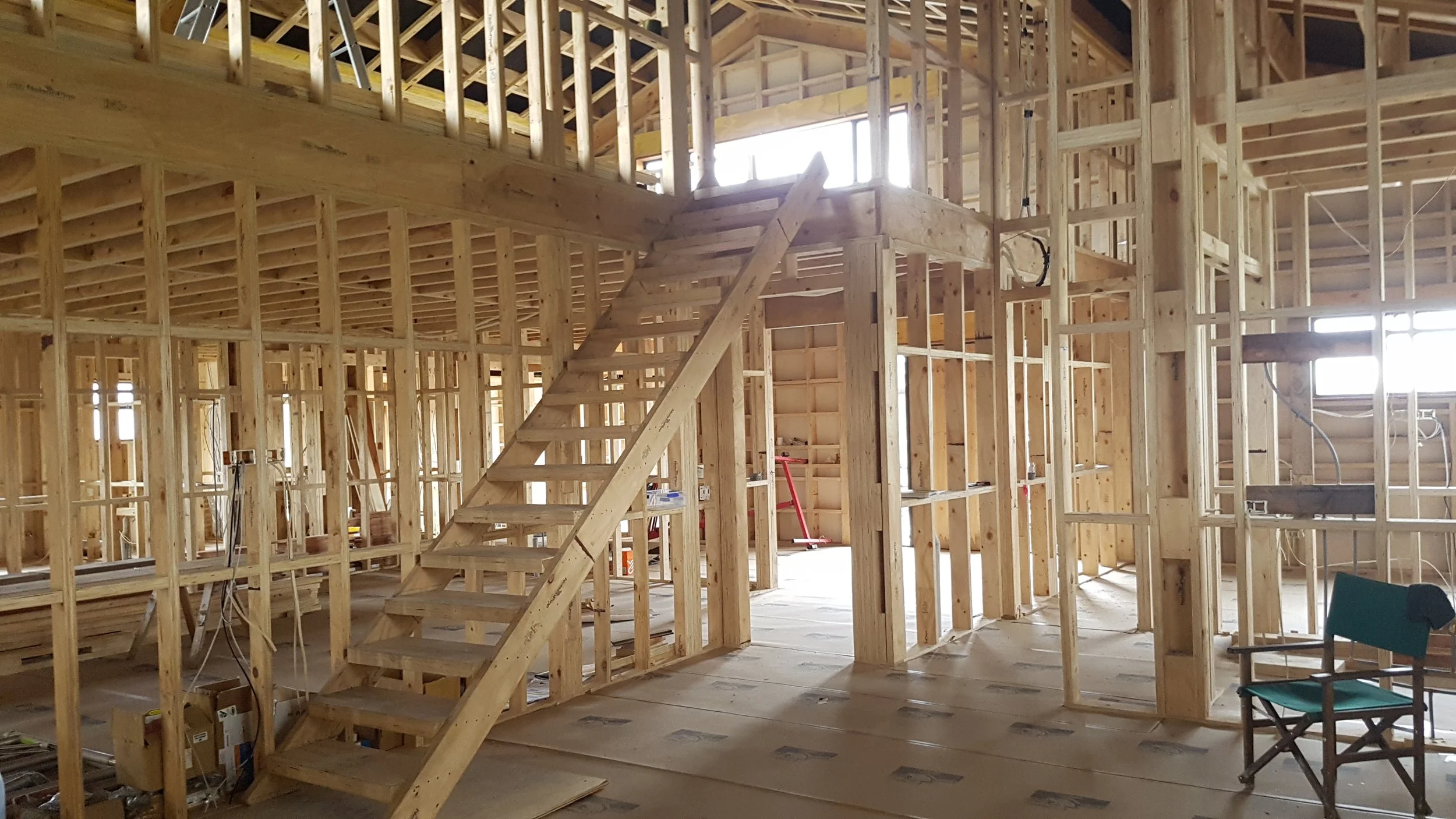
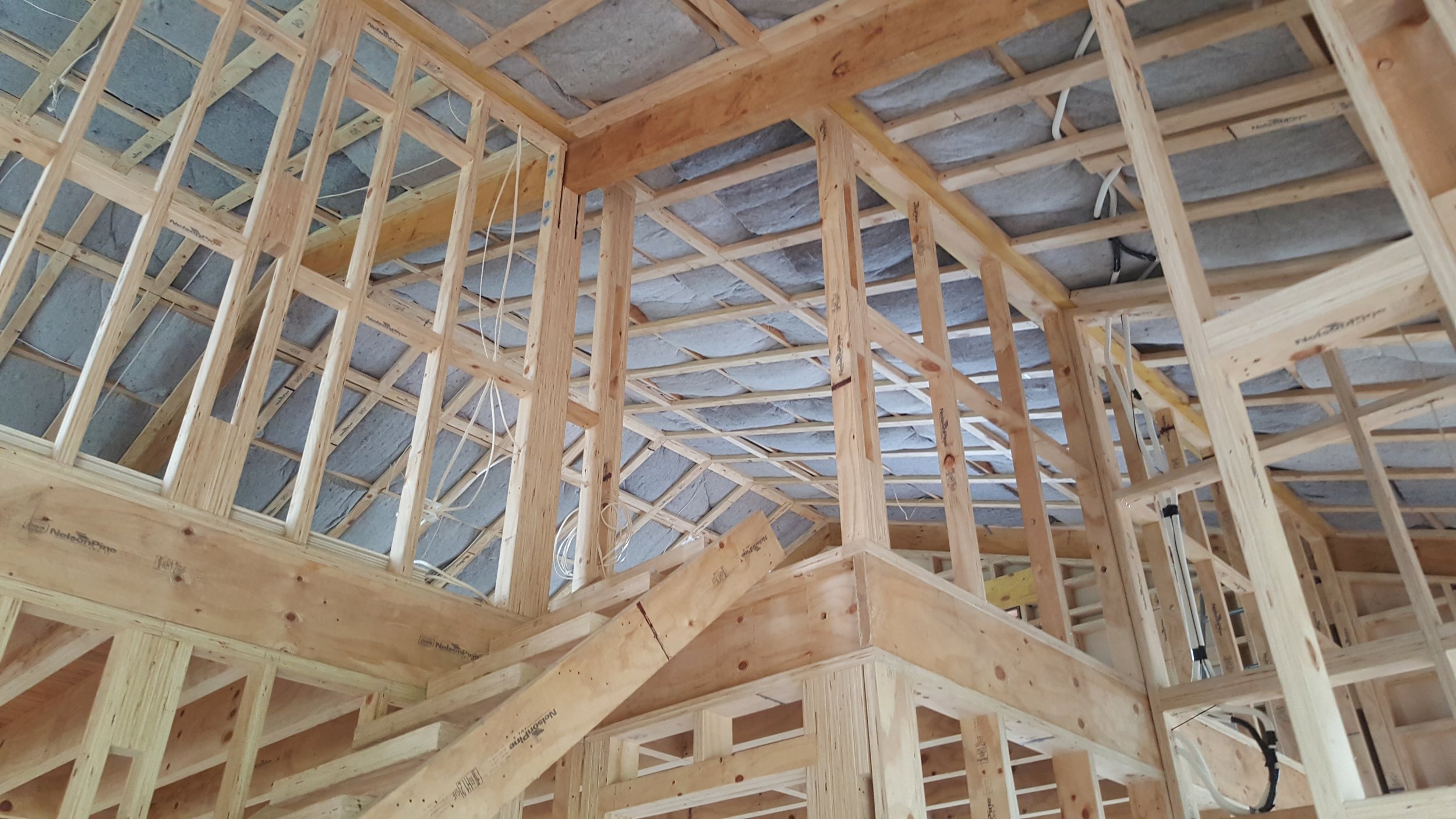
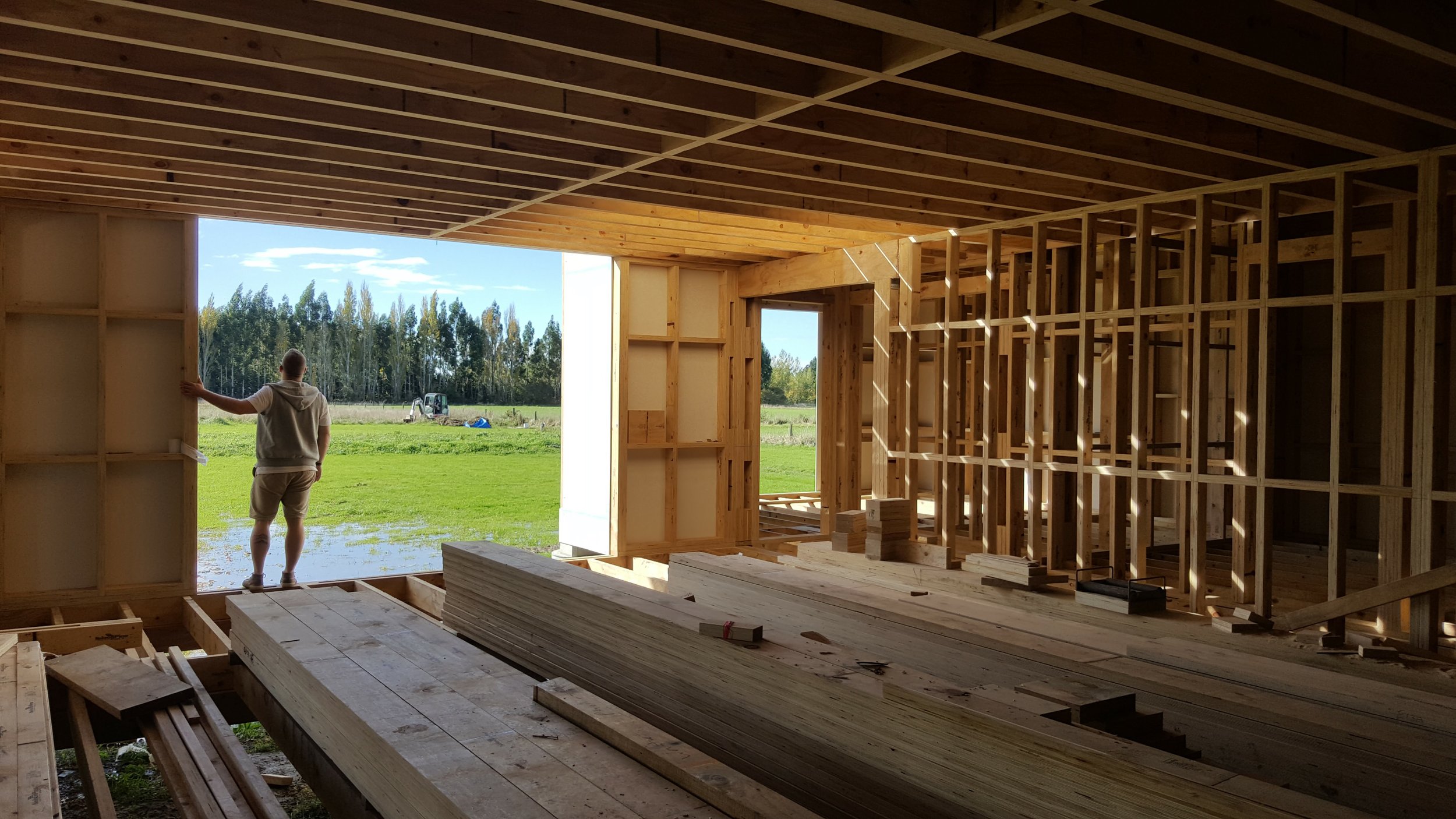
Foreverbreathe home under construction in Ohoka, NZ.
The Three Pillars of the Foreverbreathe Specification
-
Performance
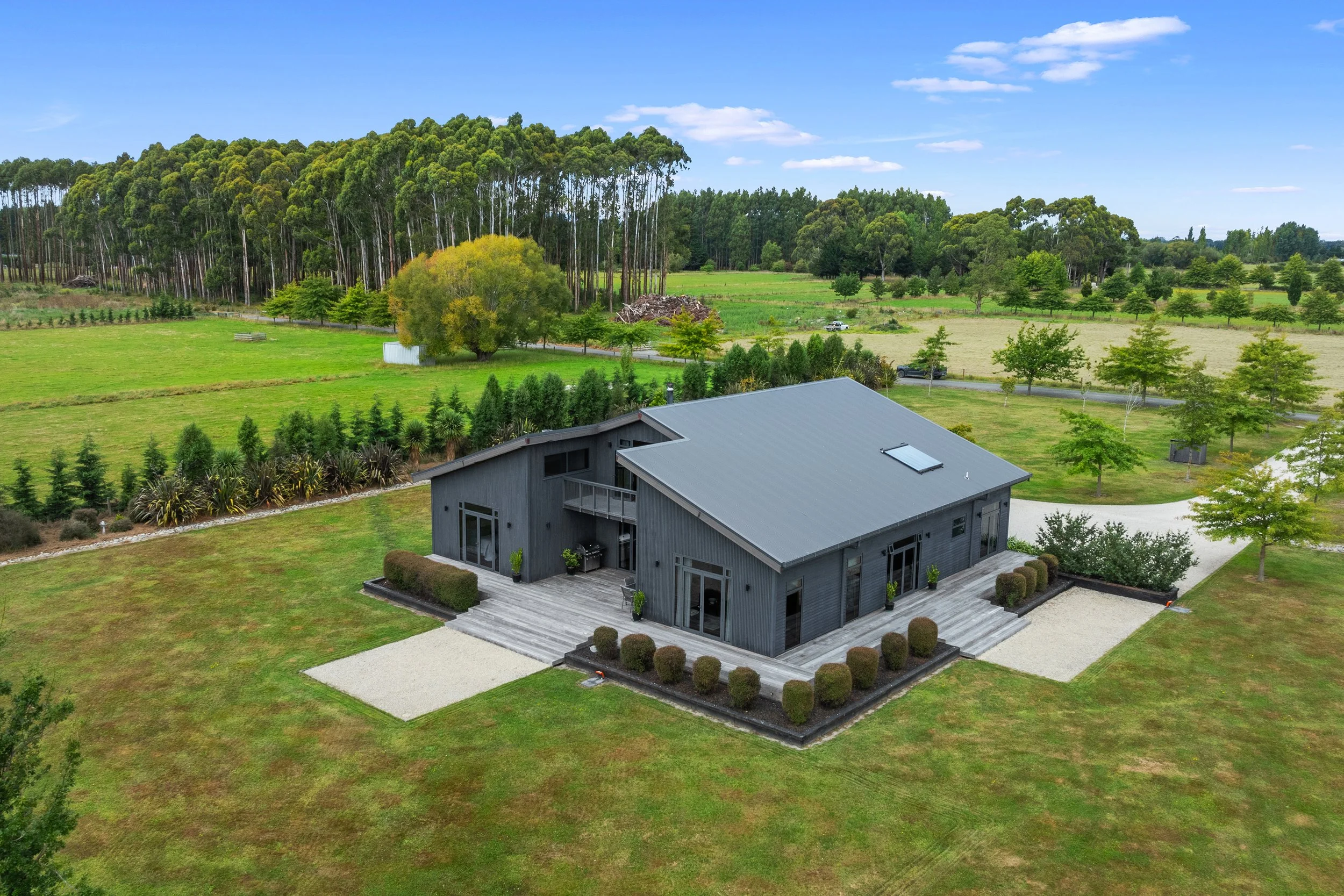
The Foreverbreathe wall system incorporates significant mineral mass, which helps slow the transfer of heat through the building envelope.
This creates what is known as thermal lag, meaning heat from the exterior takes longer to reach the interior of the home. In warmer climates, this can help reduce peak indoor temperatures during the hottest parts of the day.
Combined with breathable insulation materials, this approach helps stabilise both temperature and humidity levels.
-
Durability
The materials used in the Foreverbreathe Specification are selected for their durability and long-term performance.
Magnum Board is non-combustible and resistant to moisture, while wool insulation maintains its structure and performance over time.
In coastal or humid environments, breathable wall systems can also assist with moisture management, helping reduce the likelihood of condensation-related issues within the wall cavity.
-
Health
Indoor air quality is another key focus of the Foreverbreathe approach.
The specification prioritises low-toxicity building materials and zero-VOC components, helping minimise exposure to off-gassing chemicals commonly found in conventional construction materials.
Wool insulation also has natural filtration properties that can assist in reducing certain airborne pollutants.
Comparing Building Approaches
Both Passive House and Foreverbreathe aim to improve building performance and comfort compared with conventional construction.
The Foreverbreathe Specification offers an alternative approach by focusing on breathable building materials, natural moisture management, and thermal mass.
For builders, architects, and homeowners exploring healthier ways to build, understanding these different systems can help inform better decisions for the local climate and project goals.
| Feature | Passive House | Foreverbreathe Specification | Standard Australian Construction |
|---|---|---|---|
| Overheating Risk | Low when designed correctly (can increase if cooling or shading is inadequate) | Very Low (Active Thermal Battery) | High (often relies on active cooling) |
| Moisture Control | Mechanically controlled (MHRV systems) | Natural hygrothermal diffusion | Limited (typically relies on extraction fans) |
| Fire Behaviour | Varies depending on material selection | Non-combustible, Active Cooling, char-forming | Combustible framing and linings common |
| Off-Gassing Risk | Varies depending on materials used | Zero VOC & filters formaldehyde | Higher use of petrochemical-based products |
| Thermal Lag | Insulation-dependent (often lower mass systems) | 8+ hours (1050 kg/m³ density) | Low thermal mass |
Interested in learning more about the Foreverbreathe Specification?
Our team can help builders, architects, and homeowners understand how the system works and how it can be applied to projects in Australia.